How to Make Friends in a New City When You Don’t Know Anyone
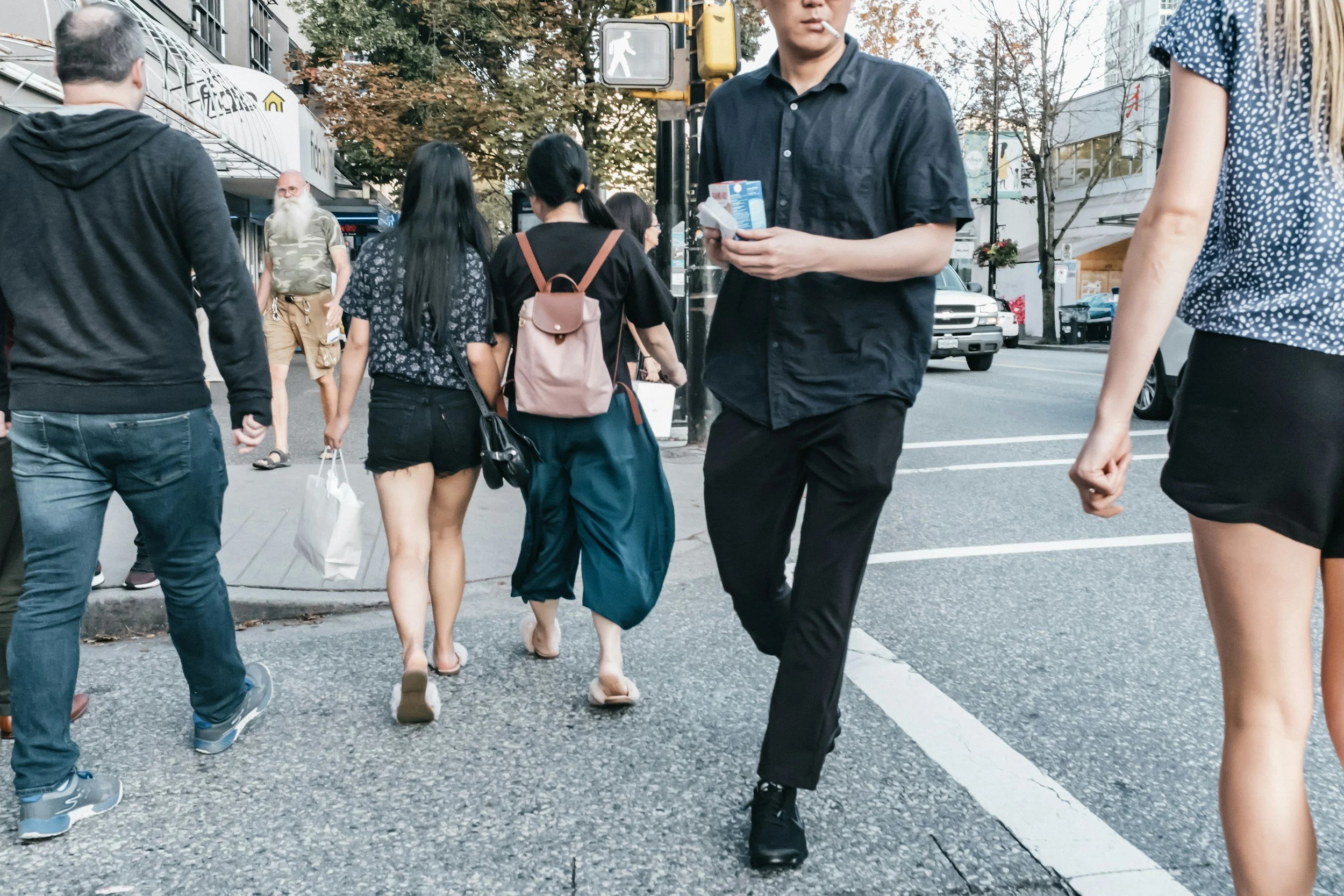
street lights, people…
Whether you’ve just done it for the first time, or it feels like a regular cadence of life-- packing everything up into checked luggage, your friend’s dubious jalopy, and/or a backpack and pointing yourself toward the next city skyline is always rife with uncertainty, opportunity, and, yes, a solid amount of dread.
Moving somewhere new is one of those life experiences that can look very glamorous from the outside: New neighborhood. New coffee shop. New job. New friends. And maybe even a new version of yourself.
But underneath all the possibility, there is also the very real experience of standing in your new apartment surrounded by half-open boxes, realizing you do not know who you would call if you got sick, needed help carrying something weirdly heavy, wanted someone to come with you to a movie, or just needed to be gently perceived by another human being after a bad day.
You may be lucky enough that your big move comes with anchors, like family, a partner, or family. More often, though, we move for one strong reason and we kind of forget about the rest.
But whether we plan for it or not, we need friends. We need connection. We need that web to catch us when work goes poorly, our partner has finals, or we aren’t getting calls back this week.
let’s strategize
So, what’s the trick to making friends and building a well-rounded life in a new city?
As ever, the magic is: taking a little bit of risk, followed by consistency, curiosity, and vulnerability.
P.S. I’ll mostly talk about this in terms of cities, but this works in a small town too. The principles are the same. In a smaller community, you may need to work the available options more, and depending on how close-knit the community is, it may take longer to crack into the gooey center. But the center is there.
Go out on a limb - A big life transition like moving to a new city creates a lot of momentum to continue trying new things. You have already interrupted your routine. That momentum makes this is an especially great time to take a few social risks.
You gotta go where the people are. Unfortunately, most of us do not make a robust community by sitting alone at home, scrolling through apps and chats, expecting connection to just happen because we are technically “available.” Friendship usually needs repeated contact, shared context, and some actual moments of being in the same place at the same time.
So check out new events you “always wanted to try” but didn’t before: A dance class. A neighborhood volunteer day. A book club. A community garden. A running group where, ideally, no one cares how fast you are. A storytelling night. A ceramics class. A board game night. A mutual aid meetup. A local lecture. A queer craft circle. A hiking group. A Skip the Small Talk, perhaps, for completely unbiased reasons.
And deep dive into old favorites, too, but with an eye toward connecting with other people around something you already love. If you already love climbing, don’t just climb silently and disappear. Try taking a class, joining a group session, or asking someone how they figured out a route. If you love music, go to the smaller shows where people linger after and actually talk.
And yes, going alone can feel awkward. It can feel like everyone else got the secret instructions and you are just standing there holding a seltzer, wondering what to do with your arms. But going alone is also one of the clearest signals you can send to the other people at the shindig that you are available for connection.
We have a whole post on going to events alone if you want more support on that front. For now, just know this: it is allowed to be awkward and still be worth it.
Keep showing up - One almost guaranteed way to make connections and lay the groundwork for friendship is by becoming a regular.
This is one of the least glamorous pieces of advice and one of the most effective.
Whether it’s the corner coffee shop, Saturday night rave, community gardening, a weekly trivia night, the same yoga class, the same open mic, or the same neighborhood bar where the bartender eventually learns your name, you probably won’t arrive on day one and feel like you belong.
That does not mean you are doing it wrong.
Belonging usually does not announce itself immediately; it accumulates through small, repeated moments. In some ways, it’s a numbers game. Keep having interactions, and eventually one will spark.
So pick a few places or activities that you can realistically return to. Go for the options you can actually see yourself attending again when you are tired, behind on laundry, and not feeling especially charismatic.
Friendship grows best in places where you can be consistent.
Be curious - Anxiety tends to make us self-focused in unhelpful ways.
This is extremely human. When we are nervous, we often start monitoring ourselves. This kind of self-monitoring can lead to rambling, total silence, abrupt oversharing, disappearing too quickly, or other social choices that make sense when your nervous system is trying to protect you but do not always help you connect.
Curiosity is a way out.
Instead of trying to perform “interesting person,” try becoming genuinely interested.
Ask people about their experiences and feelings. It doesn’t need to be intense or high-stakes. It just needs to show that you’re interested and paying attention.
You can ask things like:
How did you end up in this city?
Have you been coming to this event for a while?
What do you like about this neighborhood?
What’s been your favorite thing you’ve found here so far?
What made you want to try this?
What’s something that surprised you about living here?
What do you do when you want to have a really good day here?
The best questions usually invite someone to share a story. They make room for the other person to reveal something real without requiring them to immediately unpack their childhood.
And then, the important part: listen to the answer.
Ask a follow-up. Notice what they light up about. Reflect something back. Let the conversation become less about “how do I make this person like me?” and more about “what is it like to be this person?”
This shows you’re someone who cares. And that’s one of the biggest things that people look for in a friend.
Share a little of yourself, as you’re ready - Whatever circumstances led to your move, you might be feeling a little tender.
Be sure to care for those feelings.
It can be tempting, especially in a new city, to project an image of someone who Definitely Has It All Together™. It can also be tempting to submerge the interests you have that feel “uncool.”
Love to break it to you: those flaws, uncertainties, and quirky interests are some of the most delightful things about you.
You do not need to lead with your deepest wounds or your most unfiltered inner monologue. Please do not trauma-dump on the unsuspecting person next to you at pottery class. But you can practice letting people see a little more of the real you.
You can say things like:
“I’m new here, so I’m still figuring out my places.”
“I actually came alone because I’m trying to be better about doing things even when I don’t know anyone.”
“I’m kind of obsessed with this very specific hobby and I’m choosing to own it.”
“I’ve been having a weird week, so I’m glad I made it out tonight.”
“I don’t know many people here yet, so I’m trying to say yes to more things.”
These are all doors that invite people to respond to whatever they’re interested in while getting to know you.
And when you let people see real pieces of you, the right people get a chance to recognize you.
Don’t confuse friendliness with friendship - When you’re lonely in a new city, it can be easy to assign enormous meaning to every pleasant interaction.
This is understandable. When we are hungry for connection, crumbs look like a meal.
But friendliness is not always friendship. Friendliness is often the starting material friendship is made from, but it usually needs follow-up, time, and mutual effort before it becomes something sturdier.
So enjoy the warm conversation without immediately deciding this person is your new best friend or, conversely, that they hate you because they didn’t text back in a time frame that your anxious brain finds morally acceptable.
Instead, practice making small bids.
“I liked talking with you-- want to grab coffee sometime?”
“I’m going to that event next week too if you want to meet up there.”
“You mentioned that bookstore-- I’d be down to check it out if you ever want company.”
Some people will say yes, and some will say no. Others will mean well and still not follow through. This is all part of it. The goal is not to force every nice interaction into a friendship. The goal is to keep creating the conditions that make friendship as likely as possible to happen.
Make the follow-up easy - A lot of potential friendships die just because no one made the next step concrete.
“We should hang out sometime” is lovely, but it asks both people to do a lot of invisible work later. They have to remember, decide when, suggest something, risk rejection, and hope the other person is still interested. That is a lot for two people who just met next to a snack table.
Make it easier.
Suggest something specific and low-pressure:
“Want to grab coffee next weekend?”
“I’m trying that new ramen place on Thursday if you want to join.”
“Want to go to the next one of these together?”
“I usually work from that cafe on Fridays-- feel free to come cowork.”
“I’m making a little list of places to explore; want to pick one?”
You do not need to make the hangout perfect. In fact, it is better if it is not perfect. Early friendship thrives on low-stakes repetition more than highly curated plans.
Expect the lag - One of the hardest parts of making friends in a new city is that there is often a lag between effort and belonging.
You may do all the “right” things and still have a stretch where you feel like you are throwing your heart into the abyss and not hearing anything back.
This does not mean you’re doing anything wrong.
It means that friendship takes time to compound.
A lot of the early work is invisible. But if you stay consistent, things usually start to cluster.
This is the part you cannot fully “hack.” You can only keep making conditions more favorable.
Build multiple kinds of connections - When you move somewhere new, it is easy to put enormous pressure on the first few people you meet to become your entire community.
Try not to do that to them, or to yourself.
A well-rounded life usually includes different kinds of connection. Not everyone has to be a best friend.
You might have:
The person you go to shows with
The neighbor who knows when your packages arrive
The coworker who makes the workday more survivable
The friend you can talk to about dating
The friend who likes weird museums
The person you text for last-minute dinner
The group where everyone knows your name but not your full backstory yet
The long-distance friend who still knows the old versions of you
That counts. That is not “less than.” That is a web.
And in a new city, webs matter. They make it so one person being busy does not mean you are alone, and that’s crucial for anybody’s general sense of wellbeing.
Remember that other people are looking for their people, too - One of the great lies of loneliness is that everyone else is already set.
Some people are set, sure, but many people are not.
You are not uniquely “behind” or awkward, and you are almost certainly not the only one secretly hoping someone else will make the first move.
Sometimes the most generous thing you can do is be a little braver than the other people at the shindig.
Say hi. Ask the question. Suggest the coffee. Invite the acquaintance. Admit you’re new. Come back next week.
Final Thought
Making friends in a new city is largely about setting the right groundwork, being consistent, and giving yourself a lot of compassion and wiggle-room for when things don’t go according to plan.
And when you can, choose spaces designed to make the first few steps easier. That’s part of why we make Skip the Small Talk events the way we do-- so you don’t have to stand around wondering how to begin. You can just show up, sit down, and have a real conversation with another person who also decided to take a small risk on connection.
Which, honestly, is how most good things start.