Making Friends Is Supposed to Take Work: A Conversation With Dr. Marisa G. Franco
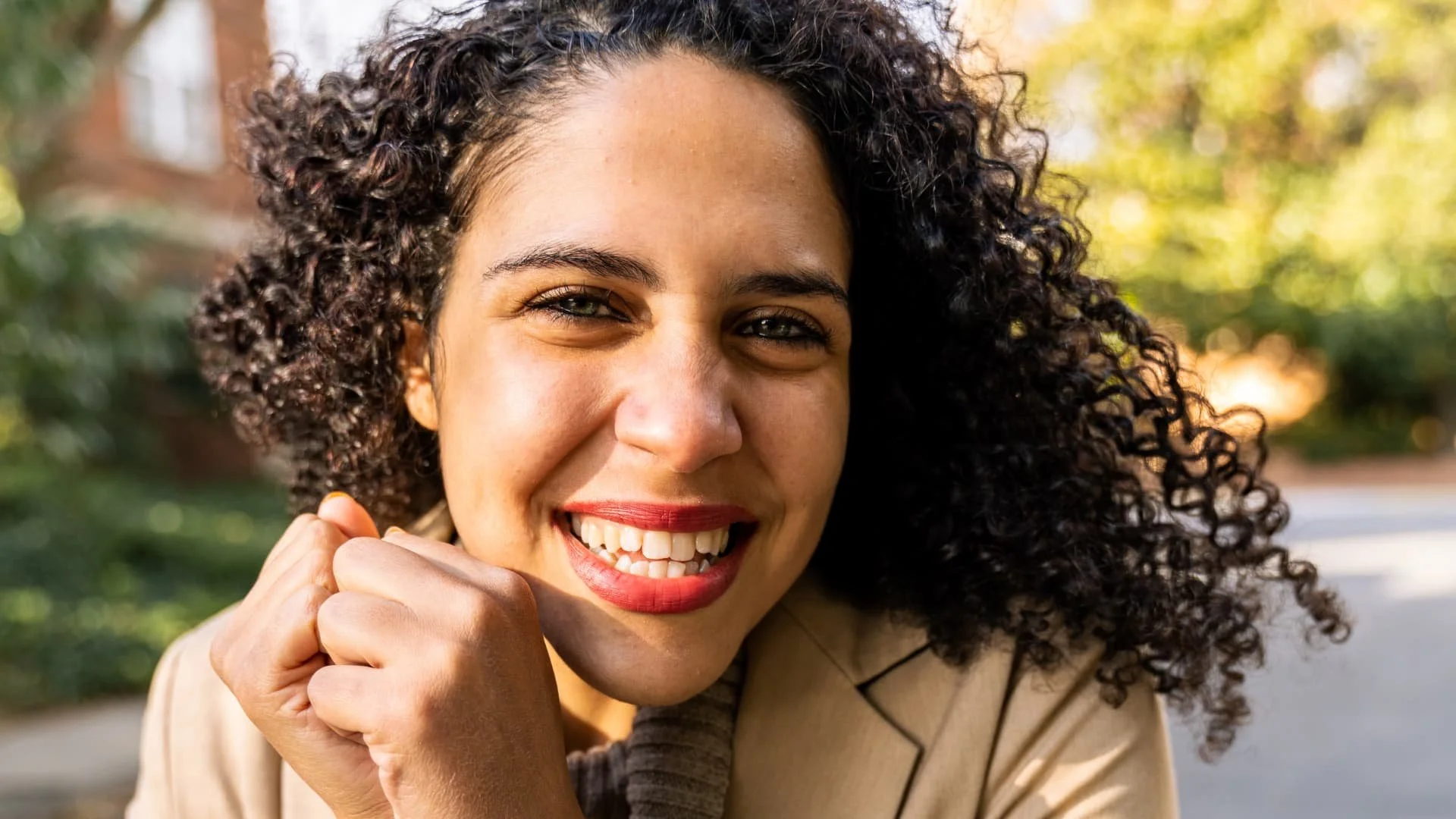
Dr. Marisa Franco, author of upcoming book Worth. (photo credit: Dr. Darren Agboh)
If you have ever wondered why making friends as an adult somehow requires vastly more effort than it seemed to when you were eight, friendship researcher Dr. Marisa G. Franco has some reassuring news: you are not suddenly terrible at friendship; the circumstances changed.
Marisa is the author of Platonic, a book about the science of friendship, and the forthcoming Worth, out September 15, which looks at self-worth, emotion, rejection, and what it takes to actually let ourselves be loved.
I got to talk with Marisa about why friendships rarely happen “organically” in adulthood, why we consistently underestimate how much other people like us, what social anxiety does to our attempts to connect, why rejection might deserve a rebrand, and why learning to feel bad might actually make us better friends.
Why doesn’t friendship just happen anymore?
ASHLEY: What got you interested in studying friendship and loneliness in the first place?
MARISA: I had a breakup and I took it hard. I asked my friend Heather to do this wellness group where we would meet up and go for walks and practice mindfulness and share stories from our lives.
I found it so life-changing and transformative, and it made me question a lot of the beliefs I had about friendship, which were that it's a lesser form of love– that only romantic love makes me worthy and complete.
And I was like, “Why doesn't platonic love matter? It has mattered so much to me.”
I felt like my own misconceptions were really part of a broader culture that devalues friendship. So I started to question that; I read all these books on friendship and was like, “I don't know if the book that I want to exist exists,” which is one that uses research and sees friendship with depth and dignity. So I was motivated to write Platonic.
ASHLEY: With Platonic, what was the response like from people who read it? Did you hear anything in particular that surprised you about what people got from it?
MARISA: I think the most important tip that I heard was to assume that people like you.
The fear of rejection was something that I really tapped into– I talked in Platonic about how people underestimate how liked they are. That's called “the liking gap.” And when people are told that they're liked, they become friendlier, warmer, and more open. It becomes a self-fulfilling prophecy. That's called “the acceptance prophecy.”
So that really stuck out to people: “What does it look like for you to go into interactions assuming that people like you?”
Honestly, it's something that I use now when I'm in a conflict or a period of insecurity in a friendship. I remind myself that if I make the assumption that the other person likes me, that's typically the way to move forward in a way that stabilizes the relationship more.
The other thing that people really hooked on to was this idea that friendship doesn't happen organically. And if you think it does, you're only going to get lonelier over time.
ASHLEY: I'm curious where that comes from, the assumption that this should be easy. Because I definitely find myself experiencing that. For instance, at Skip the Small Talk events, something people say a lot is, “I'm so surprised. You really have to follow up with people afterwards to be in touch with them.” And in my head, I'm thinking, “Well, yeah! How else would you imagine it would happen?” Where is this coming from? Why do we believe that making friends is so much easier and more natural than it is?
MARISA: Well, there's this great sociologist, Rebecca G. Adams, and she says that for friendship to happen more or less organically, we need repeated unplanned interaction, like school. You see each other. We don't have to put it in our schedules. It's just automatically there. And you experience shared vulnerability.
And because so many of us get that in school with our recess, lunch, and extracurriculars, we go into adulthood assuming it's the same way, not recognizing that we're no longer in environments that provide that structure.
So if we rely on that same set of assumptions, that it's just going to happen because we're going to keep seeing each other, then we're actually not going to have friends.
Part of the appeal of Platonic was recognizing the difference between making friends in childhood, where you have structures for connection, and adulthood, where now it's kind of more up to you.
We are much more afraid of rejection than we need to be
That problem gets even harder when we assume other people are rejecting us before they actually are.
ASHLEY: How does social anxiety factor into people seeing rejection where there isn't rejection?
MARISA: These tendencies for us to see rejection when it's not there are taken to an even greater extreme if we suffer from social anxiety.
We see that, for example, for people who are particularly self-critical, the liking gap is even more pronounced.
We also see that the very behaviors that we often use to cope with our social anxiety in fact make us more likely to be rejected.
There is a study where people who were socially anxious were told not to engage in safety behaviors, which are behaviors they use to avoid rejection– like not really talking much, or blabbing, or talking really fast because they assume the other person doesn't want to listen to them. When people are told to give up these safety behaviors, others actually like them more because they're more present and more engaged.
And this is this general phenomenon: That when we tend to fear rejection, we tend to reject people.
The people who fear rejection the most are in the corner. They're on their AirPods. They're only talking to one person and ignoring everyone else.
So our fears of rejection can cause the very thing that we fear.
We need to have the awareness to ask ourselves: “Are my fears of rejection sending out signals that I am now rejecting everyone else? And how can I both acknowledge or feel those fears of rejection and allow them to be there while still acting in ways that can create connection?”
That requires us to recognize, again, that these are rejection fears. They're not necessarily reality.
Because this is something we see across all of the research: this phenomenon called “undersociality.” We underestimate how positively people receive our acts of connection.
ASHLEY: It also makes me wonder about “vulnerability hangovers.” I wonder how much of that is related to this phenomenon where people assume, “I was vulnerable, they didn't take it well,” when in reality people took it fine but just don't know how to show it on their face.
MARISA: The research on affection is really interesting because people think that others won't receive their affection as positively as they think, and then even after they do the act of affection and see the reaction, they're still underestimating just how much people appreciate it.
So it's a helpful reminder that people are appreciating your acts of connection much more than you can even fathom– much more than you even know.
And when I ask my students– and this is from the research too– we might meet someone new and be afraid of reaching out because we don't want to come off too strong or clingy.
And in fact, people report one of the things that most predicts relationship satisfaction in a new friendship is how much that person initiates.
ASHLEY: Wow. People prefer initiators.
MARISA: Yeah. They want people to say, “Let's hang out. Let's get coffee.”
So it's ironic that the very behaviors we're perceiving as “cringe” or “too much” are the very behaviors we need to be doing to make friends, and the very behaviors that people actually really appreciate.
Maybe being rejected isn’t actually the embarrassing part
ASHLEY: Why are we so terrified of initiating?
MARISA: It makes me think of risk regulation theory, which is this idea that there's this sort of tension between protecting yourself and protecting your relationships.
So the things you do to protect yourself are: “I'm not going to reach out. I'm not going to be affectionate. I'm not going to be vulnerable. And then I'm not going to risk any rejection.”
And so I might feel safer in a way.
But the things we do to protect our relationships, like being thoughtful, vulnerable, and putting ourselves out there– all of that makes us more vulnerable to rejection.
So it is always a risk, even though it's much more likely to go better than we think.
I think there needs to be much more of a normalization around rejection and a destigmatization of rejection.
I think rejection harms us because it is inherently painful as social creatures, and also because we stigmatize it.
We think if you're rejected, something's wrong with you, rather than, “you're going for the life you really want.”
But isn't that beautiful? Rejection is the consolation prize sometimes for going for the life you really want.
And it's beautiful to be the person who loves more.
I think part of this is that we need to valorize the people who are willing to put themselves out there and be rejected.
I remember listening to this podcast, and someone was like, “If you send a message on a dating app, think of it like throwing a coin into a fountain.”
You're making a wish. You're not expecting it to come true. You're not monitoring whether it comes true. You're just putting it out there and then putting it out of your mind.
That's kind of what you have to do, particularly in dating apps, where it's so rife with rejection.
But I think you're right. People think, “I'm the only one. There's something wrong with me,” rather than, “literally everyone is experiencing this.”
ASHLEY: I love the idea that part of the solution is getting a lot of reps in. I think it's such an unglamorous but real way to actually make friends. When people say “put yourself out there,” I think that's such vague advice. But I love the very specific advice of, “Get a lot of reps in. Talk to a lot of strangers.”
MARISA: One intervention that has successfully helped people overcome fears of rejection has been Gillian Sandstrom’s.
She has great research where she tells people to talk to a certain amount of strangers in a given week, and people think that about 40% of the time, people will talk to them, when it's actually about 90% of the time.
Her research shows that when we just do the thing we're afraid of, eventually it gets easier and easier.
Her research has changed my life because I assigned it to my students. Bell Hooks, in Teaching to Transgress, says, “Don't make your students be more vulnerable than you are.”
So I have done the talking-to-strangers scavenger hunt where I'm talking to strangers throughout the week.
And I'm like, “First of all, this is more joyful than I thought. This gives me a boost of energy.”
“Second of all, I'm connecting with people. This is making connections so easy.”
Now, I go to any event and I'm very easily talking to people and creating those connections.
People say it's so hard to meet people in person, and I'm like, “Not when you talk to strangers. It's actually quite easy.”
And it gets easier and easier over time.
The feelings we don’t want to have
Marisa’s new book, Worth, starts somewhere slightly different: before we can figure out how to relate to other people, what happens if we actually pay attention to what is going on inside ourselves?
MARISA: Worth I consider a practice of treating your internal world as if it matters, and treating every feeling as if it matters. And that culminates in a sense of feeling like you matter.
There's this framework that I speak about: “Feel, heal, do.”
For example, I have a friend. I wanted to be close with this person. I was reaching out a lot. They were sort of busy a lot.
Eventually, we find a time to hang out, and they said they got injured and they needed to recover.
And all I want to feel, Ashley, is compassion for them.
But what I really feel is rejected because I've been reaching out and it hadn't worked out for so long, and because of the lack of reciprocity.
Before, I would have been like, “Let me ignore my feelings and just say the thing I should say, which is compassion for you. Take care of yourself.”
But realizing that Worth is about acknowledging the feelings we don't want to feel, acknowledging the feelings we don't want to be there, I instead acknowledged that I felt rejected and offered myself care.
Feel, heal. I put my hand on my chest and say, “You're okay. You're lovable. I'm here.”
And then, you can ask for a change in your environment. In this case, I didn't, because after I went internally, I felt okay.
And I could genuinely say to my friend, “Take care of yourself.” I could genuinely have compassion. Not because I was people pleasing, but because I had worked through my own feelings.
My feelings no longer got in the way of my capacity to have compassion for my friend.
And that is a moment that we need to practice when we feel rejected.
So many of us feel like, “I shouldn't feel this way. I shouldn't be taking this personally.”
We're invalidating ourselves.
Instead, turn towards that moment of rejection. It's okay that it's there. What do you need? What could you tell yourself to make you feel better in this moment?
That's the practice that will make rejection easier.
We shouldn't abandon ourselves, make ourselves feel worse, shame ourselves in the moment in which we need our own help and compassion.
Now there's nothing I should feel. There's only what I do feel.
And I can only regulate feelings I'm willing to acknowledge in myself.
That has made rejection easier and has honestly made me a more genuine friend without feeling like I need to abandon myself in the process.
What happens when “boundaries” go too far?
ASHLEY: What a beautiful intervention, especially for people pleasers.
MARISA: That's why you have this violent shift of the people pleaser.
I've had friends who have struggled with people pleasing and then have shifted to becoming really self-absorbed and have said, “I'm not gonna do anything for anyone, and this is me taking care of myself. I'm protecting my peace.”
That's because you have avoided your feelings for so long that now they've become this extreme version and it's making you a worse friend.
But you can actually acknowledge how you feel in each moment, and it won't accumulate and turn you into the opposite, where now you're more self-absorbed.
Disrupting that transition from one extreme to another comes from those tiny moments where you allow yourself to feel upset, to feel hurt, to feel rejected, and don't try to just cover it up quickly.
ASHLEY: I myself definitely went through what I in my head refer to as “ninja boundaries.” I think largely, at least in my experience, it was a result of being afraid to feel the feelings. I was like, “Oh, if I feel the feeling, then I won’t know how to set a boundary, so I need to set a really big boundary up front.”
And then over time it felt like it was easier to set smaller boundaries. It's not like I'm cutting this person out of my life forever. It's more like, “I need a break for a day, and then I'm gonna get back to this text.”
Why do you think our generation is so quick on the draw when it comes to ninja boundaries?
MARISA: I think we don't know how to feel.
And I think that where we are rigid, we have wounds.
So if we act rigidly for everyone else or act rigidly for ourselves, there's something deeper to look at there.
People who feel truly worthy, the people who feel most worthy, not only feel worthy within, but they see all of the worth in other people.
There's this way that they engage in this practice of mutuality, which is like: “I want to take care of myself and you. Let's find a creative middle ground.”
So it's not like “No.” It's, “Let me get my need met and figure out a way to meet yours as well.”
Maybe that's, “I can't come to the party, but I'm going to send a nice text that day to tell you how important you are to me,” because I know that that RSVPing “no” can feel like a rejection.
And so we have this mental space to consider that we are in relationship with other people, rather than rigidly taking care of ourselves because we're so overwhelmed, or rigidly people pleasing to other people.
If we could allow ourselves to feel everything, we wouldn't need to design our relationships in ways that protect us against those feelings.
What self-worth has to do with friendship
ASHLEY: Does your work on friendship show up in your book Worth? How?
MARISA: One of the things that drove me to write Worth after I wrote about friendship was coming across this theory called “self-verification theory,” which is this idea that we look for relationships that verify our sense of self.
So actually, if I feel negatively about myself and people perceive me too positively, I think, “I'm gonna let them down. They're gonna figure out who I really am.”
And it's quite an anxiety-provoking experience.
So then I realized that to be in healthy relationship, it's not just about how we treat people, but how we feel internally.
What is the work we can do that would allow us to tolerate people loving us and not see that as a threat?
That's how I see the connection really between these two.
I think Worth is the prequel to Platonic, honestly.
We can do all these relational acts, but first we need to check in with ourselves and see if this is what we want.
I specifically profile someone whose worth-struggles are related to friendship in the book: Esme.
In middle school, she called a friend every day to gossip and share how she felt. Eventually that friend said, “I don't know why you're calling. We're not friends.”
For the next several decades, Esme never initiated another friendship because of that memory.
She even met up with a new friend and said, “I'm gonna need you to initiate because of this thing that happened a long time ago.”
What Esme's story shows us is that self-worth issues come from our memories.
Memories are the database of self-esteem, as researchers put it. And memories don't just record the past; they predict the future.
So Esme is clearly gearing up to be rejected again like she has before.
But if it's in the past, if it's about the memories… what can we do?
We actually can change the emotional valence of our memory.
Worth is really about this theory called “memory reconsolidation,” which is the finding that when people return to their memories and picture a different outcome, like Esme going back to her middle-school self and saying, “Hey, nothing's wrong with you. Everybody experiences rejection. I'm so proud of you for putting yourself out there. There's going to be people in this life who love you,” and she pictures that memory and pictures herself intervening, pictures a new outcome, then research finds that it not only improves self-esteem and decreases trauma symptoms, but you see changes in the hippocampus, the part of the brain associated with recording memories.
Becoming “secure-ish”
ASHLEY: How does this all fit into attachment theory? Attachment theory, at least the way I learned it, seems somewhat stationary or static. But it seems like you're saying we actually have more impact over our attachment style than we think.
MARISA: You can.
I really think of attachment styles as a series of unprocessed memories from the past.
So the work of memory reconsolidation is the work of changing worth and the work of changing attachment styles.
But one of the interesting intersections that I talk about in the book is how secure attachment has become a status symbol.
And it’s motivating us to say, “I feel secure. I feel secure,” and we're neglecting or abandoning the parts of ourselves that don't.
When I'm anxious, I'm going to push away that anxiety because I need to act secure.
I don't actually admit when I feel insecure in a relationship, and then I withdraw again because I'm not attending to the feelings that are there.
So in the book, I tell people to be secure-ish and not secure, so you can always leave room to care for the parts of yourself that don't feel that way.
It's much more about this bottom-up process of, “I feel, and I don't need to use that feeling to make a judgment about who I am or my attachment. It can simply be there as a sign that I need to care for myself.”
Learning how to feel
ASHLEY: Do you have any advice for people who struggle with even knowing how they feel?
MARISA: Step one is to recognize that it's a skill set.
It's not something automatic that comes to any of us, and it's not something that you'll never be able to feel because “that's just who you are.”
It's a practice.
Maybe now I ask myself, “How do I feel in this moment?” Or even use a feelings wheel.
It's a lot about attuning to your body. What am I sensing in my body? A tightness in chest? A lump in my throat? If I applied a label to that, what would that feel like?
And so it's a practice that comes over time.
If you can't do that yet, that's not a sign to give up and that you'll never be able to do it.
It's almost like learning to write. It's just something that takes time.
I learned something that really helped me when I interviewed someone secure-ish, Dr. Skylar Jackson. He said he would wave his hand over his day to see where his emotional energy lied and which of the small things were actually big to him.
I thought that was so beautiful, the way that he embraced his own internal world.
And I realized in that moment that these secure people, it's almost like they're looking for their pain so that they can offer themselves care.
Any part of yourself is a part of you to cherish.
That allowed me personally to pay more attention to myself and notice the moments when I felt something and pushed it away so quickly that I didn't even know it was there.
Sometimes we think, “If I welcome this feeling, it's going to get bigger. I'm going to have to act out of this feeling.”
But instead, knowing that we can only regulate the feelings we can acknowledge– that actually allows me to be better for everyone else.
I don't have to be threatened by these feelings.
Even the ones that feel inconvenient for me are worth my time and attention.
What happens when we refuse to feel at all?
ASHLEY: How would you convince someone who's afraid of looking into their feelings to give it a try? For the people who think, “I don't really do that sort of thing. I'm afraid it's gonna get too big. I'm afraid it's gonna be unmanageable.”
MARISA: If you fear looking at your feelings because you think they'll be unmanageable, likely they already are.
Because the feelings that we suppress are the ones that hijack us. They're the ones that send us into despair, the ones that send us into depression.
I remember interviewing this guy for the book Worth who was numb to his feelings.
His son cried, and he tried to comfort him. His son cried, he tried to comfort him. His son cried, he tried to comfort him.
By the fourth or fifth time his son was still crying, it triggered him so much because he felt like he wasn't a good enough father.
He starts yelling at his son so intensely that his son stopped calling him “Dad.”
This is the reality about numbing to our feelings.
The people who are the most numb are the people who become the most hyper-emotional in moments, because all of those feelings we suppress take over.
Again, I know it's scary to look at those feelings, and it might be a process, and you might need help, and you might need a therapist.
But the fact is, if you're always suppressing your feelings, they're affecting you much more than they will if you're willing to look at them.
Learning how to be in pain is one of the most transformative experiences you can have in your life.
And I think that's what Worth is about.
It's about teaching us all how to be in pain.
What Marisa hopes we take from Worth
ASHLEY: If readers take just one thing away from Worth, what are you hoping they'll take away?
MARISA: I hope we can allow ourselves to become real.
And by that I mean to feel what we feel. To allow what we feel to be there. To not feel like we need to be feeling anything differently than what we do. And to love those parts of ourselves.
I'll say, in my own experience, in my own therapy, there's a part of myself I felt ashamed of.
It was desperate. It was needy. It was insecure. Untethered.
And I struggled with it.
In my own therapy practice, we work with the divine, and so my therapist says, “What happens when you give that part of yourself up to the divine?”
And I did, and I pictured that: the divine force sitting with this needy part of me.
And what it told me was, “You're perfect too. You're perfect too.”
I realized in this moment the problem isn't that there's a part of myself that's needy or dependent.
The problem is that I've been ashamed of that part of myself.
The problem is never how you feel. It's the shame. It's the meaning. It's interpreting it as you're less than, or that you shouldn't feel this way.
That is what makes feeling so hard and what makes us ignore and try to amputate parts of ourselves.
I think Worth is about getting back to wholeness, or what psychologists call “integration,” which means: even the parts of ourselves that we struggle with belong to us, too. And those are parts of ourselves that we need to learn to cherish.
Worth comes out September 15 and will be available wherever books are sold. You can follow Dr. Marisa G. Franco on Instagram at @drmarisagfranco or find her at drmarisagfranco.com.